
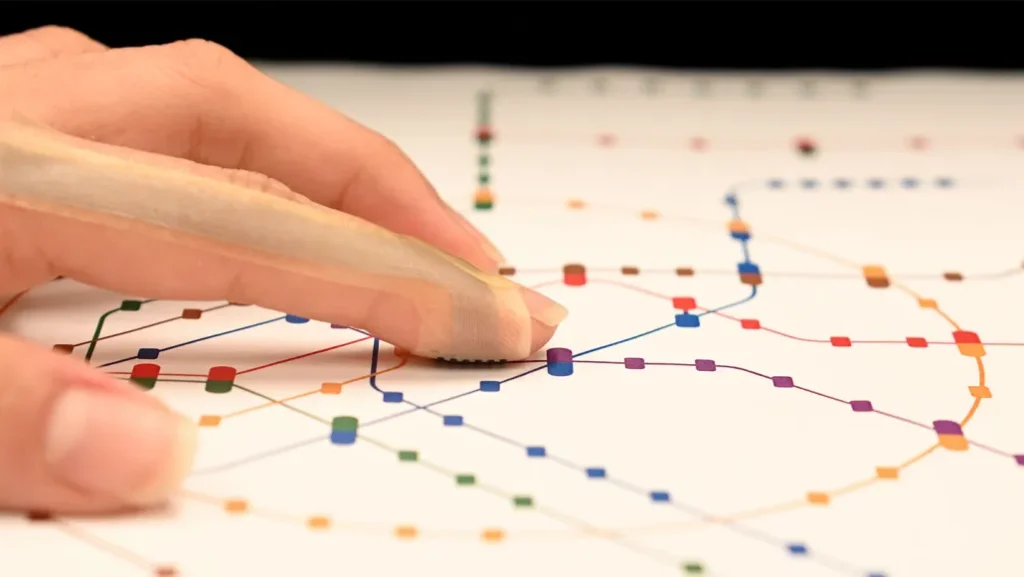
It’s studded with tiny dots that vibrate to mimic the feel of real-world textures
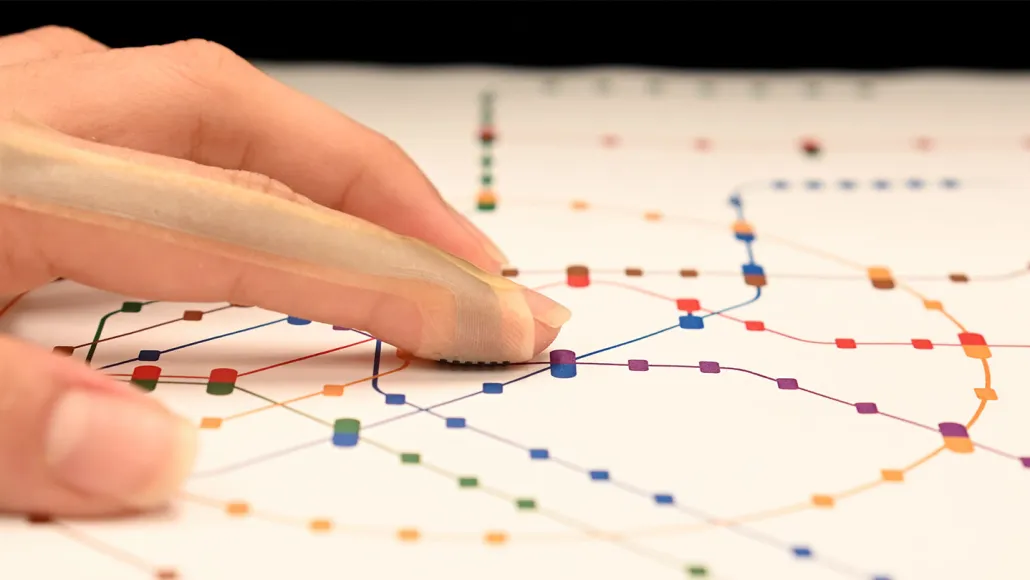
Worn on a fingertip, the new device uses a grid of tiny nodes to simulate textures, such as the feel of fabrics. Northwestern University
Phones, tablets and other electronic gadgets display lifelike images and play realistic sounds. What’s next? Maybe, making virtual objects feel real.
A new device that’s worn on your fingertip — like a Band-Aid — is a step in that direction. It’s designed to replicate the sensation of touch.
In early tests, volunteers wearing this device could identify patterns of virtual indentations on smooth test surfaces. They also could tell the difference between rough and smooth virtual fabrics.
This is the first tech that allows fingertips to feel virtual textures with the same speed and detail as when they’re touching real-world objects, its designers say. They described this device — named VoxeLite — in Science Advances late last year.https://www.sciencenews.org/conversion/zephr-iframe-test
VoxeLite is an example of haptic, meaning touch-related, technology. Today, haptic feedback on personal devices is mostly limited to simple vibrations. But future haptic tech could add realistic touch features, says Thanh Nho Do. This materials scientist works at the University of New South Wales in Sydney, Australia. He did not take part in building VoxeLite, but he does develop haptic devices in his own lab.
In future versions, “users could explore the material properties of clothing” when shopping online, Do suggests. Before purchasing a new hoodie, for instance, someone could feel how soft it is.
This type of tech might also, one day, help blind people read messages or maps on a phone, says Sylvia Tan. A materials scientist and graduate student at Northwestern University in Evanston, Ill., she led the design of VoxeLite.
The device isn’t ready for widespread use, Tan says. “There is still a lot of work to be done.” But she thinks that work is worth doing. “Touch plays a fundamental role in how we interact with the world,” Tan says. “Yet it remains one of the least digitized senses.”