
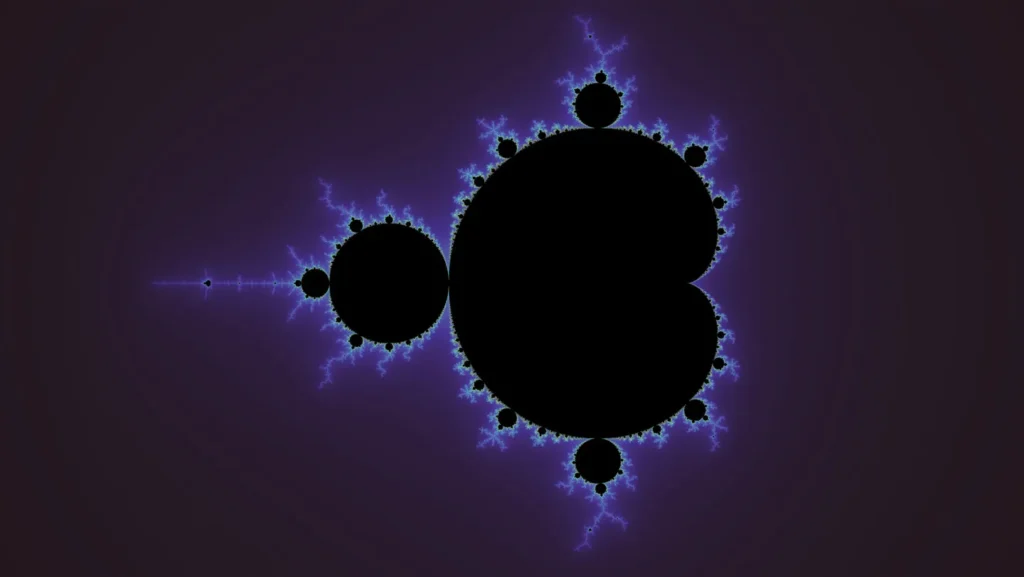
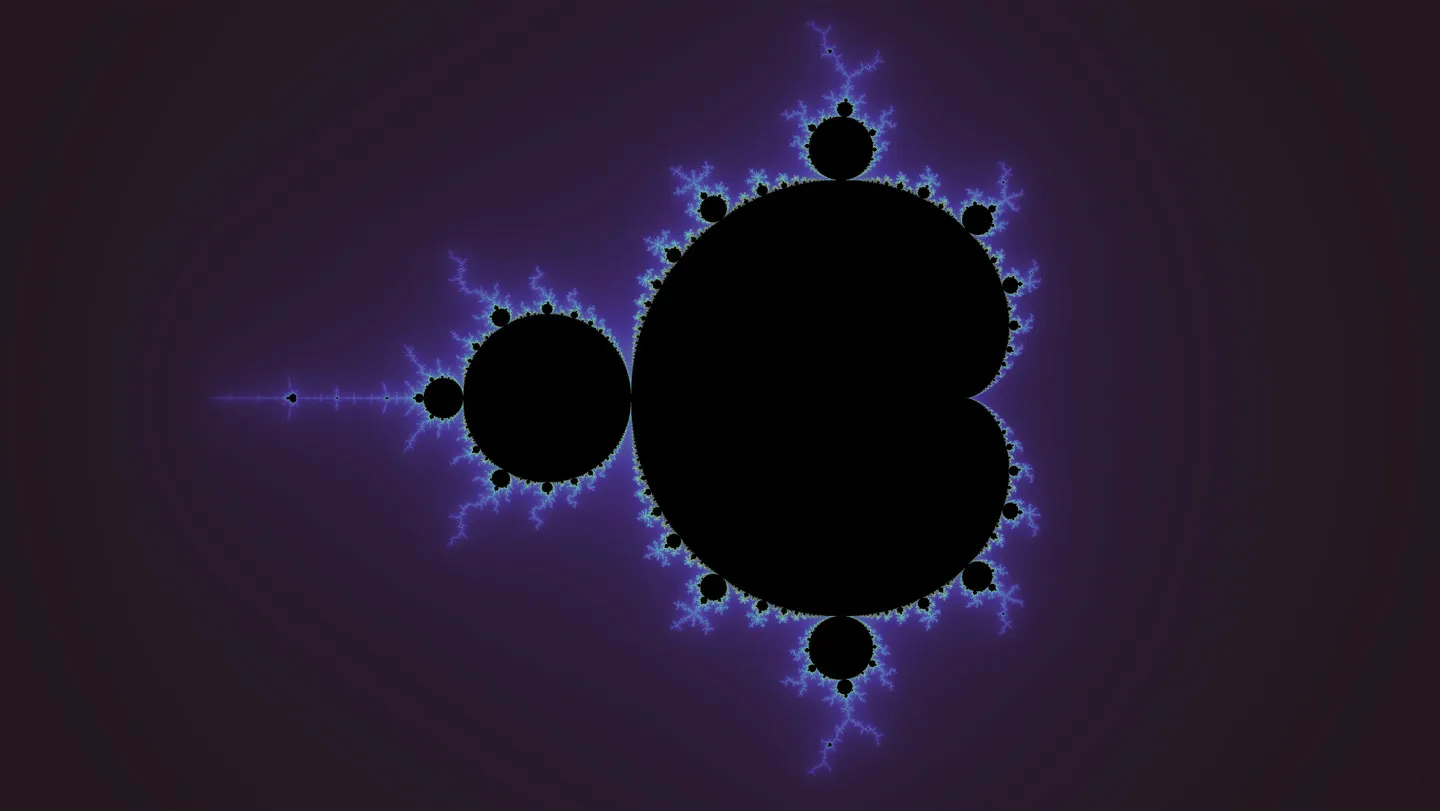
Fifty years ago, “fractal” was born.
In a 1975 book, the Polish-French-American mathematician Benoit B. Mandelbrot coined the term to describe a family of rough, fragmented shapes that fall outside the boundaries of conventional geometry. Mathematicians had been describing these types of shapes since the late 19th century. But by giving them a name — derived from fractus, Latin for “broken” — Mandelbrot gave fractals value. He introduced a way to measure and analyze them. With a name, he recognized order in complexity.
If you know anything about fractals, it’s probably this: Their hallmark trait is self-similarity. No matter how much you zoom in or out, you find similar patterns. Take a snowflake. The overall shape of the crystal is repeated at smaller and smaller scales as the snowflake branches out. (A snowflake and other natural forms are considered only “fractal like,” though, because the pattern breaks down at the level of molecules and atoms.) In a nod to this self-similarity, Mandelbrot often told people that his middle initial, B., stood for “Benoit B. Mandelbrot.” So his full name becomes “Benoit Benoit B. Mandelbrot Mandelbrot.” And spelling out the middle initial again results in “Benoit Benoit Benoit B. Mandelbrot Mandelbrot Mandelbrot.” No matter how many times you iterate, you find him behind his middle initial.