
PNAS

F1.large 1 1 E1559015114827 1024x540

Can the principles of topology help improve the world’s slums?

According to the United Nations (UN), nearly 1 billion of the 8 billion people in the world live in slums (1). These dense and disordered communities form in urban areas without a formal plan; their residents frequently lack addresses. Often they don’t have immediate access to water, power, or emergency services. Slums stem from all

Can the principles of topology help improve the world’s slums? Read More »
F1.large E1540948111533 1024x512

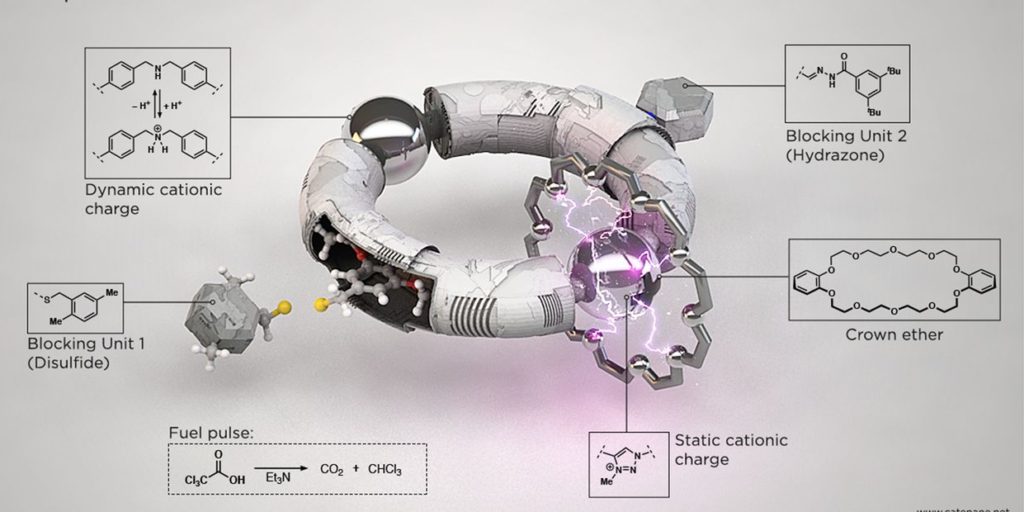
What’s the best way to build a molecular machine?

Some of the smallest, most useful machines known to science are the biological molecules that keep living things living. The protein myosin drives the contraction and relaxation of muscle. Kinesin drags cellular cargo around the cell. Motor enzymes unwind, rewind, and maintain DNA, and bacteria use a molecular motor to rotate their whip-like flagella up

What’s the best way to build a molecular machine? Read More »

1101 Gerrymandering Hr 1024x512

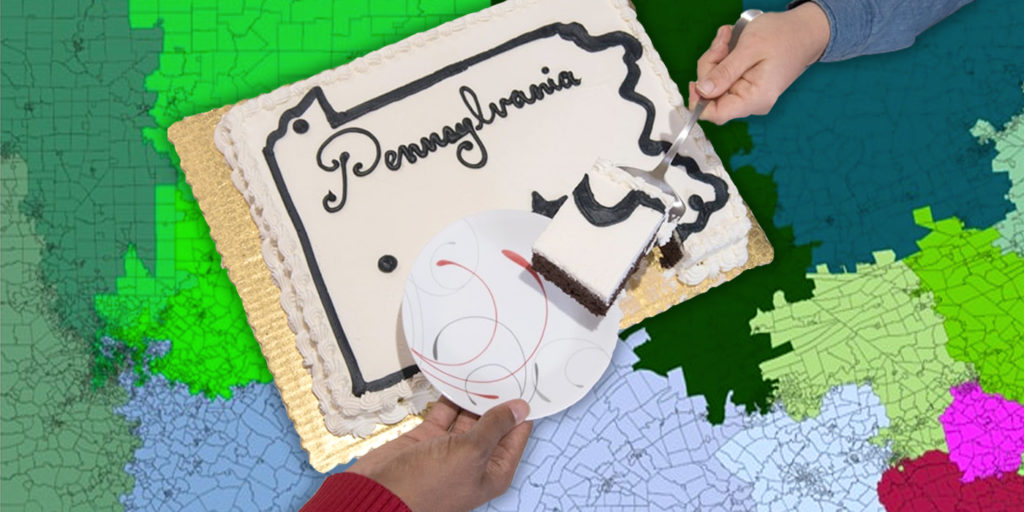
Math tools send legislators back to the drawing board

On January 9, 2018, a trio of federal judges made history when they ruled that the boundaries of North Carolina’s congressional voting districts gave an unfair advantage to Republican candidates. It was the first case in the nation in which a federal court had declared congressional maps unconstitutional because of intentional bias in favor of

Math tools send legislators back to the drawing board Read More »

Researchers find history in the diagrams of Euclid’s Elements

The fourth book of Euclid’s Elements, a 2,300-year-old geometry text, includes directions for constructing a 15-sided polygon inside a circle. The first step is familiar to geometry students: Draw an equilateral triangle and a regular pentagon so their vertices touch the circle and the two shapes share one vertex. In addition to text directions, the Elements included diagrams that

Researchers find history in the diagrams of Euclid’s Elements Read More »

How Bose–Einstein condensates keep revealing weird physics

A Bose-Einstein condensate (BEC), the first of which was shown experimentally 22 years ago, isn’t your garden variety state of matter. It formed at a fraction above absolute zero and only in atoms that act like bosons, one of two types of fundamental particles. Bosons don’t follow the Pauli exclusion principle, which prohibits two particles

How Bose–Einstein condensates keep revealing weird physics Read More »

How nonequilibrium thermodynamics speaks to the mystery of life

In his 1944 book What is Life?, Austrian physicist Erwin Schrödinger argued that organisms stay alive precisely by staving off equilibrium. “How does the living organism avoid decay?” he asks. “The obvious answer is: By eating, drinking, breathing and (in the case of plants) assimilating. The technical term is metabolism.” However, the second law of

How nonequilibrium thermodynamics speaks to the mystery of life Read More »

Supersized Viruses

On February 22, festival-goers at Melbourne’s dusk-to-dawn White Night celebration lined up in droves outside the State Library of Victoria for an intimate evening with herpes. And they got it, in a big way: Bobbling around on the 40-meter-diameter central dome on the ceiling of the library’s La Trobe Reading Room was a bright and

Supersized Viruses Read More »