mathematics

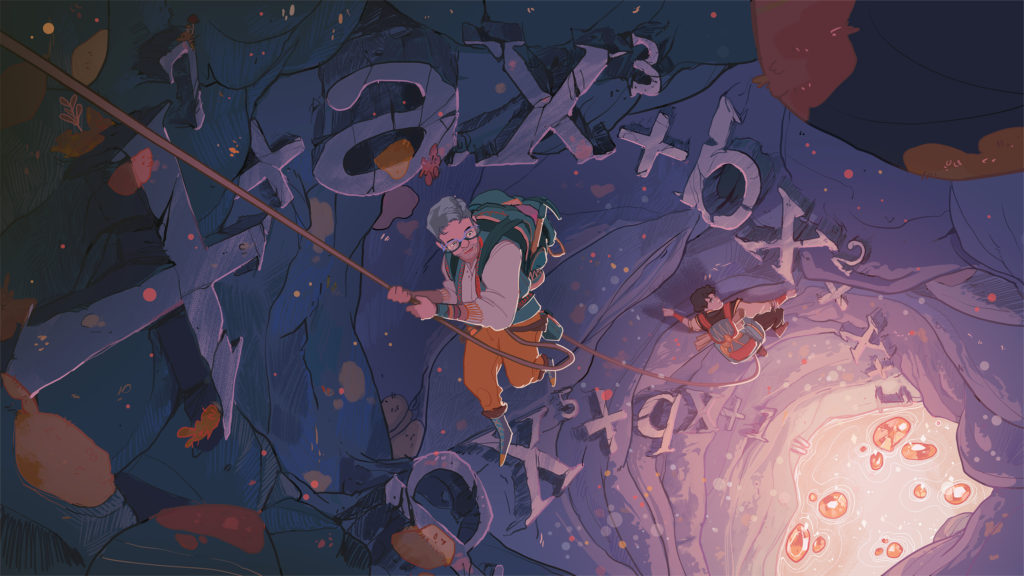
0526 Ai Math Feat A 1024x576

Math long resisted a digital disruption. AI is poised to change that

Modern formalization, supercharged by AI, could radically change the way people do mathematics Mathematician Kevin Buzzard of Imperial College London is training computers how to prove one of the most famous problems in math history: Fermat’s last theorem. Resolving the problem isn’t the point. There’s already an accepted proof that was finalized in 1998. That work

Math long resisted a digital disruption. AI is poised to change that Read More »

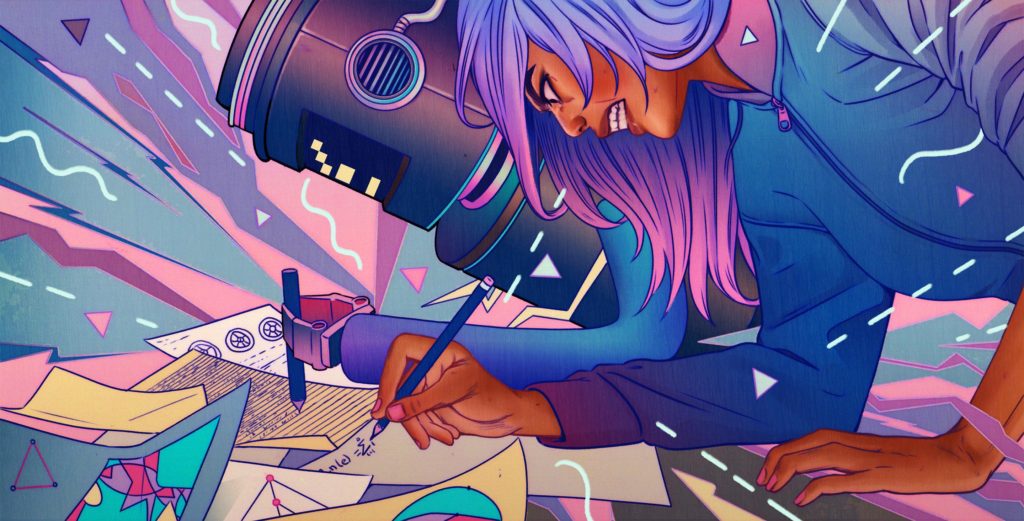
Computer Proof Race 2880 Lede 1024x521

How Close Are Computers to Automating Mathematical Reasoning?

In the 1970s, the late mathematician Paul Cohen, the only person to ever win a Fields Medal for work in mathematical logic, reportedly made a sweeping prediction that continues to excite and irritate mathematicians — that “at some unspecified future time, mathematicians would be replaced by computers.” Cohen, legendary for his daring methods in set theory, predicted

How Close Are Computers to Automating Mathematical Reasoning? Read More »

Unnamed 1

Your Hyperbolic Mind

The human brain is both a marvel and a mystery of evolution: Packed into a volume about one-quarter that of an inflated soccer ball, somewhere around 86 billion neurons form networks that enable us to do everything from mindlessly scrolling through Instagram to safely sending people into space. But a deeper understanding of the structure of those

Your Hyperbolic Mind Read More »

Donuts 2969490 1920 1024x683

Prizes, Thievery and Higher-Dimensional Doughnuts

And how mathematical collaborations yield breakthroughs. The biggest math heist in years happened the morning of Aug. 1 in a Rio de Janeiro auditorium packed with witnesses — none of whom saw it happen. The math world’s largest conference, the International Congress of Mathematicians, occurs every four years, and during the meeting, two to four

Prizes, Thievery and Higher-Dimensional Doughnuts Read More »